
Office Address
Seville, Spain
Seville, Spain
Phone Number
+(34) 624 816 969
Email Address
info@forgenex.com
Available on Google Play

Seville, Spain
Seville, Spain
+(34) 624 816 969
info@forgenex.com






 by ForgeNEX
 Table of contents [Show]
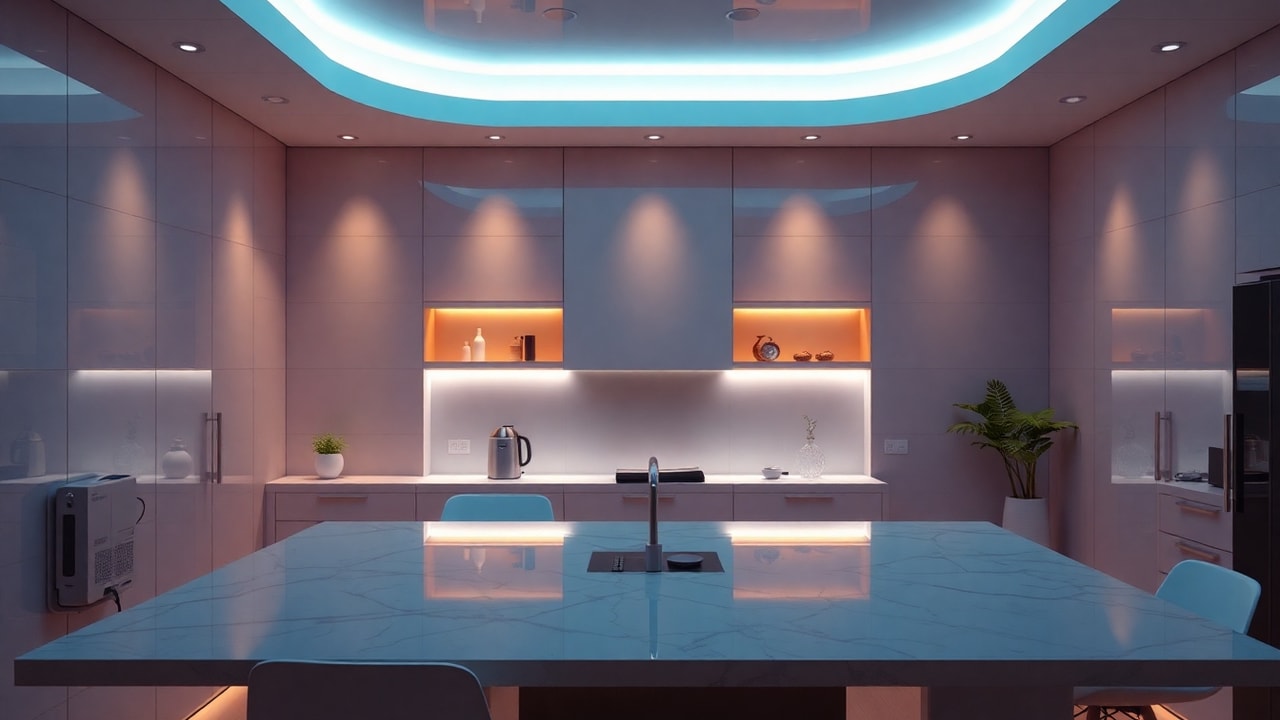
In the era of automation and observability, smart offices have ceased to be a luxury and have become a strategic necessity. At ForgeNEX, we have implemented an advanced home automation solution based on Home Assistant for a technology services company, achieving a more efficient, secure, and sustainable workspace. This success story demonstrates how the integration of IoT systems can revolutionize the daily operations of any corporate environment.
Our client, a consulting firm with 50 employees, faced multiple inefficiencies: uncontrolled energy consumption, inadequate climate control in meeting rooms, fixed lighting that did not adapt to natural light, and perimeter security based on outdated systems. The lack of a unified platform prevented making data-driven decisions in real time.
We decided to implement Home Assistant, an open-source home automation platform, as the central brain of the office. Its flexibility and support for over 2000 integrations allowed us to connect all existing devices and add new ones without needing to replace the entire infrastructure. Below, we detail the key components:

One of the greatest benefits of Home Assistant is its ability to integrate with business platforms. In this project, we connected the home automation with the meeting room booking system based on Microsoft 365. Thus, when a room is booked in the calendar, the system automatically adjusts lighting and climate control before attendees arrive. This synergy between IoT and business management is a clear example of how automation and observability can improve productivity.
After six months of operation, the results have been compelling:
This implementation would not have been possible without a meticulous approach to security, as we highlighted in our guide on implementing generative AI in workflows. Although home automation does not use generative AI, it does require robust security protocols to protect the IoT device network.

For companies wishing to embark on a similar project, we recommend:
Advanced home automation with Home Assistant is not just for homes; its scalability makes it a powerful tool for offices and corporate spaces. If you want to explore more about how technology can transform your business, we invite you to review other success stories on our blog, such as the comprehensive management for restaurants with QR menus.
At ForgeNEX, we are committed to innovation and efficiency. Our team of experts can help you design and implement home automation solutions tailored to your specific needs. Do not hesitate to contact us to start your transformation towards a smart office.
