
Office Address
Seville, Spain
Seville, Spain
Phone Number
+(34) 624 816 969
Email Address
Available on Google Play

Seville, Spain
Seville, Spain
+(34) 624 816 969





 by ForgeNEX
 Just a couple of years ago, Generative Artificial Intelligence (GenAI) burst into the collective consciousness as a kind of digital magic. The ability to generate photorealistic images from a sentence, hold coherent conversations, or write functional code seemed like an amazing novelty, but for many, it was still a technological "toy."
That era is over. The hype has given way to implementation.
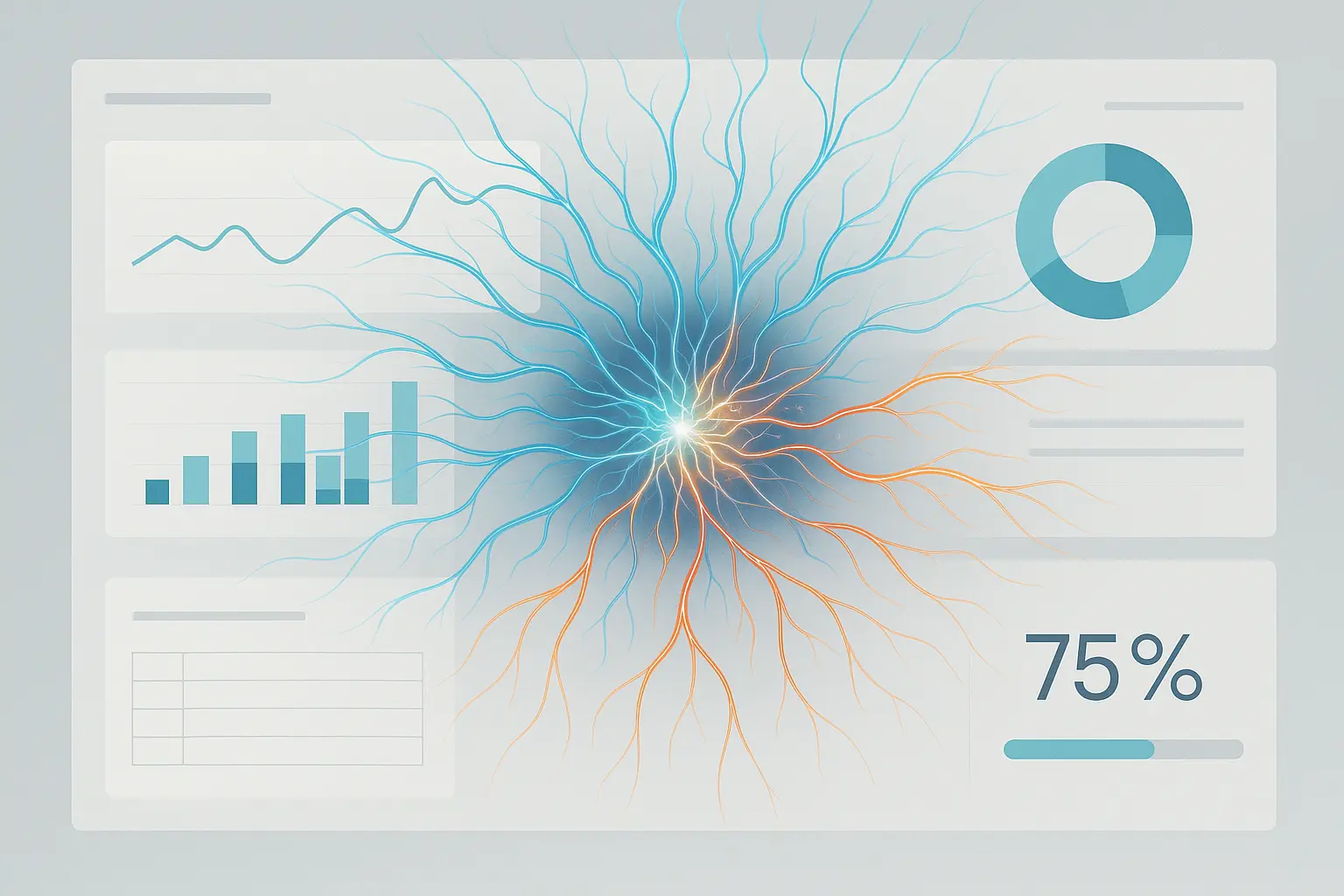
Today, Generative AI is no longer a technology we observe from the outside; it is a fundamental layer that is quietly being integrated into the tools we use every day. It has ceased to be the main show and has become the engine driving business efficiency. We are entering the second wave of GenAI: the era of integration.
Table of contents [Show]
The first contact with GenAI was through isolated platforms: we would go to one website to generate text, another to create an image, and another to code. Now, the real value is being unlocked by bringing that generative capability inside existing business applications.
The change is subtle but profound. It is no longer about "going to use AI," but about the AI coming to us, appearing in the exact context where we need it.
This integration turns Generative AI into a productivity multiplier. It automates low-level cognitive tasks (drafting, summarizing, searching), freeing up human teams to focus on strategy, decision-making, and customer relationships.
In the beginning, the GenAI race was dominated by massive "generalist models," like large LLMs (Large Language Models). They were impressive for their ability to talk about quantum physics one minute and write a poem about a cat the next. However, this versatility comes at a cost: they are expensive to operate and often "too much" for specific tasks.
The most significant trend in enterprise GenAI is the rise of specialized models. These are smaller models, specifically trained for a particular task or industry.
Think of it this way: a generalist LLM is a general practitioner. A specialized model is a neurosurgeon. If you have a digital marketing task, do you prefer a model that knows a little about everything, or one that has been exclusively trained on millions of successful ad campaigns, conversion data, and consumer psychology?
These specialized models (often open-source and self-hosted) are:
Generative AI is evolving from being a simple "generator" to an intelligent "copilot." The software of the future will not only have features but will also have an integrated AI companion to help you use them. "Microsoft Copilot" is just the beginning of a trend that will encompass all software.
For businesses, the opportunity is no longer just to use Generative AI, but to create custom solutions with it. The democratization of open-source models allows technology companies to develop their own GenAI tools perfectly tailored to their clients' needs.
For example, instead of offering a generic SEO service, one could build a GenAI tool that analyzes a client's website, compares it with their top 3 competitors, and automatically generates a blog content plan optimized for keywords where the competition is weakest.
Generative AI has completed its transition from a technological curiosity to an essential business infrastructure. Its integration into the tools we already use is making it invisible, yet omnipresent, like electricity or the Internet itself.
The debate is no longer if Generative AI will change business operations, but how quickly we can adapt. Companies that successfully integrate these capabilities seamlessly into their workflows will not only see an increase in productivity; they will completely redefine efficiency in their sector.
