
Office Address
Seville, Spain
Seville, Spain
Phone Number
+(34) 624 816 969
Email Address
info@forgenex.com
Available on Google Play

Seville, Spain
Seville, Spain
+(34) 624 816 969
info@forgenex.com




 by ForgeNEX
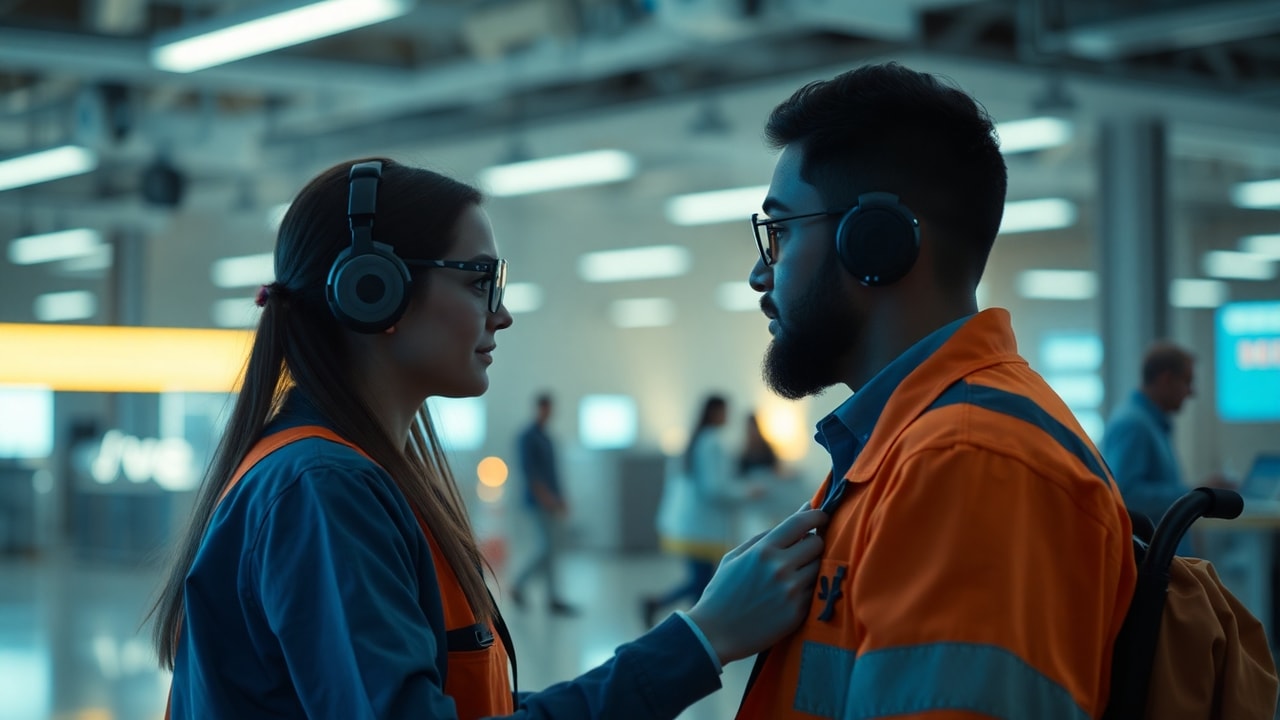
 Artificial intelligence (AI) has become a central topic in the debate about the future of employment, and a recent study reveals that the majority of people with disabilities in Spain perceive it as an opportunity, not a threat. The 15th Technology and Disability Report, prepared by the Observatory of Vulnerability and Employment of the Adecco Foundation, with support from Keysight Technologies Sales Spain, and published on the occasion of the International Day of Appropriate Technologies, offers a nuanced view of how this group faces digital transformation.
Table of contents [Show]
According to the report, 60.2% of participants consider AI a job opportunity, while 30.3% see it as a threat and 9.5% perceive both benefits and risks. This division reflects the current public debate, which oscillates between fear of massive job destruction and the view of AI as a tool that improves productivity without significantly altering the labor market.
In Spain, 4.38 million people have some type of disability (INE data from 2020), and only one in four of working age had a job at the time of the study. This reality underscores the importance of analyzing how automation and digitalization impact a group that already faces additional barriers to employment.
The report highlights that there is no evidence that AI is generating a differentially negative impact on the employment of people with disabilities compared to the general population. However, it warns that the major impacts of automation are concentrated in skilled occupations such as programming, data analysis, writing, or customer service. In contrast, people with disabilities seeking employment tend to orient towards sectors such as auxiliary services, logistics, commerce, cleaning, or hospitality, which have lower exposure to technological replacement.
As Francisco Mesonero, Director General of the Adecco Foundation, notes: “Automation should not automatically be interpreted as the disappearance of employment, but as a transformation of tasks and processes.” The key, he adds, is that no one is left behind in this transition, especially people with disabilities, who already face greater barriers. To this end, “we must prepare all people and organizations to harness the potential of AI based on accessibility and inclusion criteria.”

The study recommends paying special attention to young people and women with disabilities. The former, due to their lack of experience or human skills that complement AI; the latter, due to their greater presence in areas such as customer service or information management, where automation is transforming tasks and competencies. This double vulnerability requires specific policies to prevent the digital divide from deepening.
In this context, technology can be a great equalizer. The report emphasizes that new technologies, as long as they are accessible, affordable, and easy to use, together with AI, can help increase the labor participation of people with disabilities, facilitating both access to employment and professional performance. Tools such as e-learning platforms or customer management systems can be adapted to be inclusive, while AI offers solutions like virtual assistants or screen readers that remove barriers.
For AI to be a real opportunity, companies must adopt a proactive approach. This involves not only investing in accessible technology but also in digital training and upskilling for all employees, including those with disabilities. Efficient resource management and the implementation of trustworthy AI agents can make a difference, but always under inclusion criteria.
As the study warns, digital transformation must not leave anyone behind. People with disabilities have much to contribute, and AI, well-directed, can be a bridge to a more diverse and equitable labor market.

Original source: ComputerWorld. Analysis and adaptation by ForgeNEX.
