

The Geopolitical Panic Button: How Anthropic's Blackout Reignites the Urgency for Sovereign AI in Europe
The blockade of Anthropic's models by the U.S. raises alarms in Europe about technological dependence and the need for sovereign AI. We analyze the impact on companies and the EU's responses.
5 min read

In this article
- A Warning That Is Not Science Fiction
- The Direct and Indirect Impact on European Companies
- Europe 2031: A Dystopian Future or a Call to Action
- The Kill Switch: Reality or Exaggeration?
- The European Response: Enough or Just Lip Service?
- The Next Frontier: Quantum Computing
- Conclusion: A Turning Point for Europe
A Warning That Is Not Science Fiction
In June 2025, an unprecedented event shook the global artificial intelligence ecosystem: the U.S. government, under the Trump administration, activated an emergency blockade against Anthropic's most advanced models, Fable5 and Mythos5, citing national security reasons. For nearly a month, non-U.S. citizens—including European companies and developers—were locked out of access to these newly released technologies. The move, which some called a technological kill switch, was not lifted until June 30, after a joint review between the company and the U.S. Executive to ensure the models “align with the Government and reinforce U.S. leadership in AI.”
The Anthropic case is not an isolated incident. Rumors suggest that OpenAI could be the next target, and the company has already confirmed that its next major launch will begin with a preview restricted to “trusted partners” previously validated by Washington. This scenario, which seemed like something out of a science fiction novel, has become a real warning for Europe: technological dependence can become a geopolitical weapon.
The Direct and Indirect Impact on European Companies
The blackout of Fable5 and Mythos5 had a limited direct effect in Europe, since, as Fernando Maldonado, principal analyst at Foundry Spain, points out, “hardly anyone had even tried them here.” However, the indirect impact is much deeper. The incident has shown that the feared forced technological blackout is a real possibility, and has highlighted the European Union's limited capacity to respond to a potential disconnection of critical AI services.
For companies and IT professionals, this implies a strategic risk that goes beyond mere model availability. As analyzed in our article The Infrastructure Blockade Costing Hundreds of Millions to AI Companies, disruption of access to cloud infrastructure or foundational models can translate into millions in losses and loss of competitive advantage. Europe needs, more than ever, to develop its own capabilities to mitigate these risks.
Europe 2031: A Dystopian Future or a Call to Action
The Europe 2031 report, prepared by a group of European AI researchers, analysts, and investors, paints a grim picture if the current course is not changed. According to its projections, by 2031 Europe would control only 5% of AI-dedicated computing, compared to 80% for the United States. “The current trajectory of AI demands the most ambitious political agenda in the history of post-war Europe,” they conclude. The report warns that the lack of technological sovereignty will not only affect the economy but will have a domino effect on society, security, and innovation capacity.
However, not all voices are catastrophic. Beatriz Arias, director of digital transformation at DigitalES, argues that the key is not technological autarky but finding a balance: “We don't have to produce 100% of what we use, but we should not depend 100% on a single provider or jurisdiction.” This vision advocates for a technological diplomacy that allows Europe to negotiate from a position of strength, leveraging its strengths in regulation, standards, and stable markets.
The Kill Switch: Reality or Exaggeration?
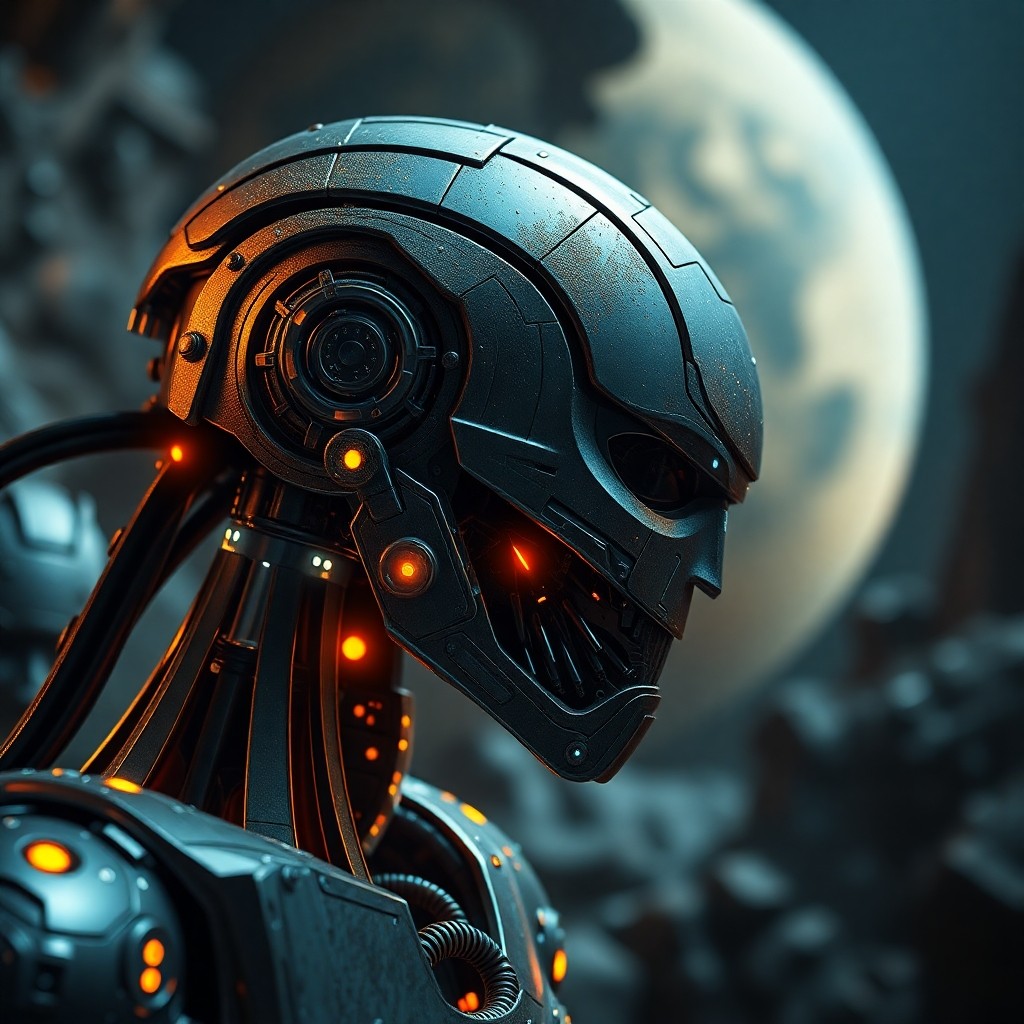
Darío García de Viedma, researcher at the Elcano Royal Institute, clarifies that a total kill switch is unlikely because “the U.S. technology export model depends on companies.” Major U.S. tech companies are the diplomatic arm of their country and need global deployment to maintain their influence. However, what is feasible are more subtle but equally damaging measures: license price hikes, reduced access to functionalities, or export controls in the supply chain (as already seen with chips). Even a “enshittification” of essential services is possible, as could happen with Starlink coverage in the event of a conflict.
The Anthropic case has served, according to García de Viedma, to “explain this risk to the public” and to clarify what technological sovereignty really means: it is not an identity issue, but about avoiding the risk that technological dependence is used as a coercive measure, for surveillance, or to damage critical infrastructure.
The European Response: Enough or Just Lip Service?
The European Union has reacted with concrete measures, although their effectiveness remains to be seen. The European Parliament has replaced Google with the French search engine Qwant as the default option, and in June the Commission presented the European Technological Sovereignty Package, which includes ambitious goals: tripling data center capacity in 5-7 years, boosting AI adoption, and fostering its own research and development. Ursula von der Leyen summarized it thus: “We cannot afford to depend on others for the technologies that keep our hospitals running, our energy grids stable, and our services secure.”
However, the Europe 2031 group accuses the EU of making “lip service” with words that do not translate into real investments. García de Viedma acknowledges that the package makes “good progress” by defining sovereignty as “avoiding risk,” but warns that investment is the key piece. For her part, Beatriz Arias argues that “the EU is doing what it should,” creating a geopolitically stable scenario for investors, and recalls that European regulations often become global standards. “Europe is no losing horse,” she insists.

The Next Frontier: Quantum Computing
While AI dominates headlines, the next great technological revolution is already emerging: quantum computing. Arias warns that in about 5 years, the convergence between AI and quantum capabilities will occur, a “dual” technology with both civilian and military applications. Europe, according to her, is “catching this train” with investments and development of its own capabilities, unlike what happened with cloud and AI. Spain, in fact, is doing “very interesting things” in this area.
For CIOs and IT professionals, this is a critical moment. As explored in our article The CEO-CIO Tandem: The New Strategic Alliance Defining the Age of Artificial Intelligence, collaboration between business leadership and technology leaders is essential to navigate these changes. Technological sovereignty is not just a state affair but a corporate strategy that must be integrated into long-term planning.
Conclusion: A Turning Point for Europe
The Anthropic blackout has been a wake-up call that has raised awareness. Europe faces a crossroads: either accelerate its path toward technological autonomy or resign itself to a secondary role on the global AI board. The announced measures are a step in the right direction, but the real test will be their implementation and the ability to mobilize investments commensurate with the challenge. As Arias points out, “this is about market and who gets more value.” And in that game, Europe can still play its cards.
Original source: ComputerWorld. Analysis and adaptation by ForgeNEX.
Keep reading
- SAP accelerates toward the autonomous enterprise: Joule and AI agents12 October 2026
- AI in professional firms: 70.5% already use it and VeriFactu arrives in 202811 October 2026
- Open weight vs open source: why precision matters for your SME11 October 2026
- Anthropic cuts internet access for its internal AI tests10 October 2026
- The Velocity Paradox: Security Can't Keep Up with AI9 October 2026