
Office Address
Seville, Spain
Seville, Spain
Phone Number
+(34) 624 816 969
Email Address
info@forgenex.com
Available on Google Play

Seville, Spain
Seville, Spain
+(34) 624 816 969
info@forgenex.com






 by ForgeNEX
 Table of contents [Show]
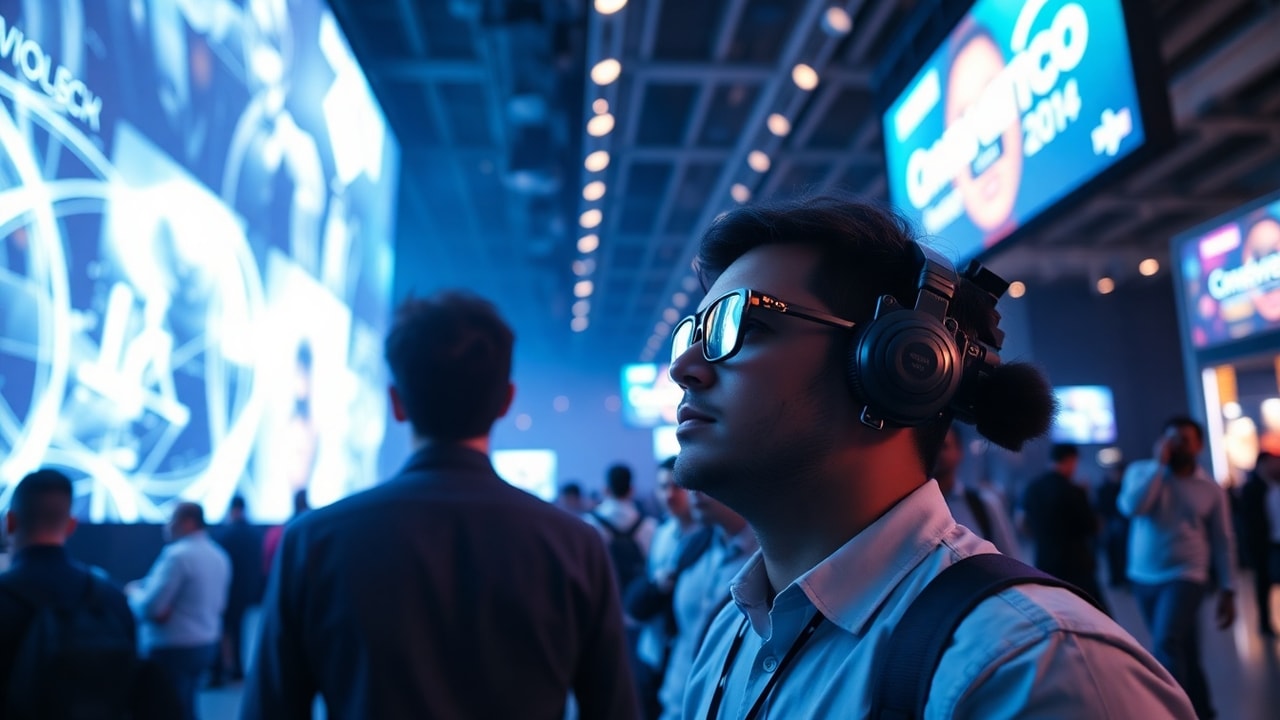
Walking the halls of VivaTech, the technology and entrepreneurship fair that celebrated its tenth anniversary in Paris in 2026, is a dazzling experience. With over 200,000 attendees from 165 countries—investors, analysts, entrepreneurs, regulators, and large corporations—and 15,000 startups gathered, the event is a thermometer of Europe's innovative pulse. ComputerWorld was present, invited by the organizers, to closely observe the trends and challenges shaping the ecosystem.
However, behind the shine of the booths and demonstrations, an uncomfortable reality emerges: talent abounds, but funding to scale remains the Achilles' heel. According to data from the organization, half of the startups that attended last year managed to close 25% of their annual business during the event days. An encouraging figure, but one that does not hide the structural problem faced by European startups when trying to leap from the development phase to commercial consolidation.
François Bitouzet, CEO of VivaTech, explained in an exclusive interview that the fair is not only about raising money, but also about finding advice, inspiration, and connecting with regulators—something many entrepreneurs do not have time for in their daily lives. The presence of figures like Jeff Bezos or India's Prime Minister Narendra Modi acts as a strong endorsement for the European ecosystem, sending the market a message that Europe has become a strategic hub for technological and business innovation. “They don't come for VivaTech; they come because the European ecosystem and its markets are interesting to them,” Bitouzet stated.
In his view, Europe must strengthen its ability to compete with the United States and China without renouncing an open and global vocation. Technological sovereignty has become a recurring theme, even mentioned in the opening speech. Bernard Arnault, CEO of LVMH and founding partner of VivaTech, emphasized the importance of European collaboration, especially between France and Germany, the guest country in 2026. “When France and Germany are on the same wavelength, all of Europe moves forward together,” he assured. A vision shared by Karsten Wildberger, Germany's Federal Minister for Digitalization and Modernization, who urged moving “from slogan to practice.”
Talent is not lacking. From orbital spacecraft to smart guitars, to robots of all kinds, European startups displayed their ingenuity in booths of various sizes. Germany, as the guest country, occupied the largest space, but delegations from Spain, Italy, Switzerland, Belgium, Luxembourg, and Ukraine also stood out. Among them, several Spanish startups captured attention for their innovative approach.
Aitaca, for example, started working on child malnutrition and has developed computer vision software that recommends ring size without margin of error. Nicolás Moreno, business development director, explained that this technology is vital for e-commerce of traditional and smart rings, reducing returns and improving sales predictions. Agrolinera specializes in intelligent management of livestock products, converting surpluses into clean energy and fertilizers. Gogoa, a spin-off from CSIC, is the first European company to certify a lower limb exoskeleton, positioning itself at the forefront of neurorehabilitation.

Despite the talent on display, European startups face serious difficulties in scaling. Carlos Fernández, CEO of Gogoa, put it clearly: “We have support from the European ecosystem, from the Basque government, we have attracted foreign talent, and yet we cannot attract investment beyond the product development phase.” With 20 employees and no losses, the company fails to spark investor interest. “We are a technological reference, but from a market perspective, we lack commercial potential,” he denounced.
Juan Gutiérrez, CTO of Agrolinera, added that “the appetite for risk is greater in the United States; in Europe there is a certain risk aversion.” This perception is reflected in funding rounds, which are small compared to American ones, and in restrictions on going public. Investors from the United States or Japan are more generous and daring when it comes to boosting or acquiring European technological talent.

There is no shortage of aid for creating technology companies or developing innovative products. Funds such as those from CDTI or ICEX support allow, according to Nicolás Moreno, “to set up a cutting-edge company in Spain.” Programs like that of the Madrid+D Foundation, in collaboration with the Single Window for Internationalization, facilitated the presence of 20 Madrid-based companies at VivaTech. Jesús Rojo González, head of European Programs at Madrid+D, explained that they offer training, coaching, and internationalization, as well as advice on accessing community programs like Horizon Europe.
However, these initiatives focus on the initial phases. The big problem lies in scaling after project development. Funding rounds are small, and European investors' appetite for risk seems to play on a different field. As we noted in our analysis on VivaTech 2026, the gap between talent and funding is a challenge that requires structural solutions.
The latest edition of VivaTech has served to showcase Europe's technological strength, but also its shortcomings, greater in the commercial than scientific area. With the cards on the table, a period of reflection and debate opens, necessary if technological sovereignty is to be deepened. Can European entrepreneurship attract the necessary interest to capture large investments? The answer will depend on the ecosystem's ability to overcome risk aversion and build bridges between talent and capital.
Meanwhile, the example of companies like Gogoa, Aitaca, or Agrolinera shows that potential exists. Digital transformation and innovation are not the problem; funding to scale is. As we have seen in other cases, such as the success story in digital transformation in logistics, the path is possible, but it requires a more mature financial ecosystem willing to take risks.
Original source: ComputerWorld. Analysis and adaptation by ForgeNEX.
