
Office Address
Seville, Spain
Seville, Spain
Phone Number
+(34) 624 816 969
Email Address
info@forgenex.com
Available on Google Play

Seville, Spain
Seville, Spain
+(34) 624 816 969
info@forgenex.com



 by ForgeNEX
 Table of contents [Show]
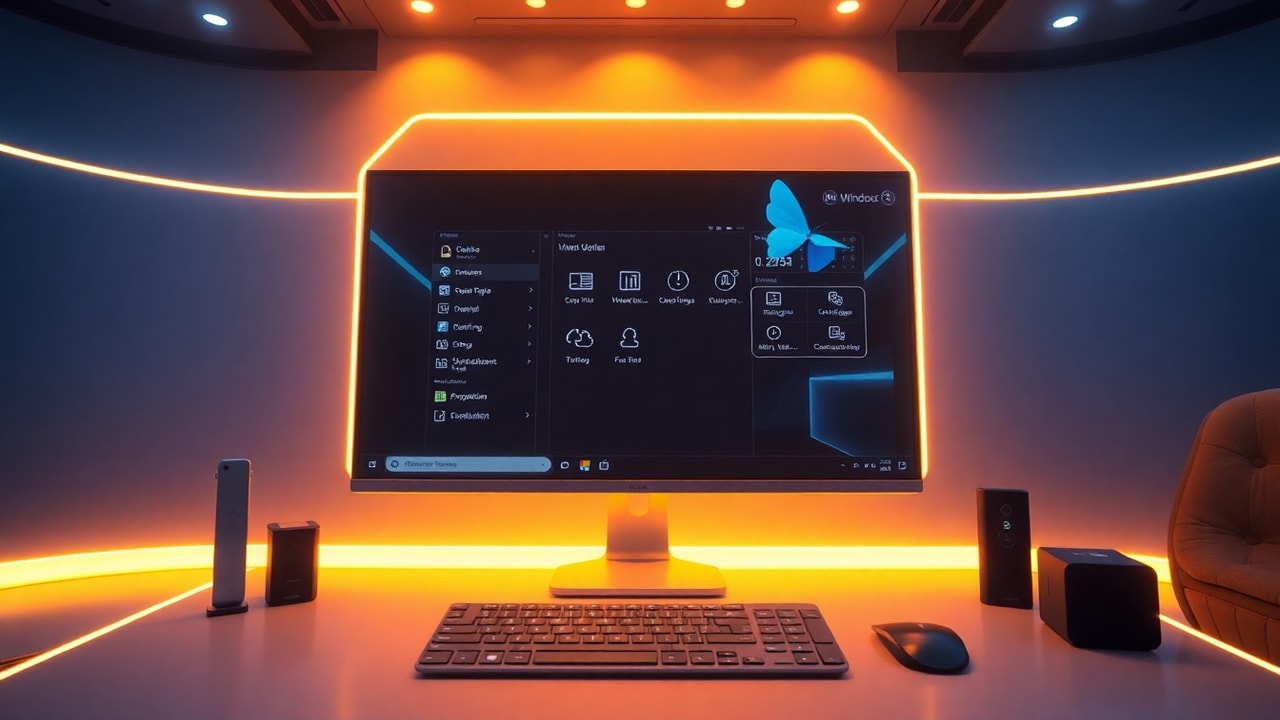
The terminal has returned to the spotlight, driven by the rise of tools like Claude Code, Cursor, and 'vibe coding'. Microsoft, far from being left behind, presents its Intelligent Terminal, an evolution of Windows Terminal that integrates AI agents to transform the developer and system administrator experience.
It is a terminal that incorporates a native AI agent, capable of interpreting commands in natural language, suggesting corrections, automating repetitive tasks, and even generating complex scripts. The idea is that the user can tell the terminal something like 'show me the processes that consume the most CPU' and it will execute the appropriate command, or even detect an error and propose a solution before the user searches for it.
For infrastructure professionals, this tool represents a qualitative leap in productivity. Tasks such as log management, service monitoring, or network configuration can be performed through conversational instructions, reducing cognitive load and execution time. Additionally, integration with Azure CLI and PowerShell will allow orchestrating cloud resources without needing to remember exact syntax.

However, it also poses challenges: trust in AI suggestions, security in critical environments, and the need for the agent to understand the specific context of each company. In this regard, governance of AI agents becomes key, as we already analyzed in our article on Snowflake and Natoma.
For organizations, Intelligent Terminal can mean a reduction in onboarding time for new developers, a lower error rate in production, and greater efficiency in operations teams. Microsoft is betting on making the terminal a proactive assistant, not just a reactive tool.
This move aligns with Microsoft's strategy to win back developers' hearts, as we discussed in our previous analysis. The company seeks to integrate AI into every layer of its ecosystem, from code to infrastructure.
Intelligent Terminal is not just a cosmetic update; it represents a paradigm shift in how we interact with systems. If we add tools like Rayfin, which addresses the gap between 'vibe coding' and enterprise production (see article), it is clear that Microsoft is building an ecosystem where AI is the glue.
For SysAdmins and DevOps, the recommendation is to start familiarizing themselves with these capabilities, test the previews, and evaluate how they can integrate into their current workflows. The intelligent terminal is here to stay, and those who adopt it early will have a competitive advantage.
Source: The New Stack. ForgeNEX analysis.
