
Office Address
Seville, Spain
Seville, Spain
Phone Number
+(34) 624 816 969
Email Address
Available on Google Play

Seville, Spain
Seville, Spain
+(34) 624 816 969




 by ForgeNEX
 Intel has decided to take a firm step toward physical AI, a field that promises to transform how devices process information locally. The company returns to the robotics market, which it abandoned years ago due to financial issues, but now with a renewed strategy focused on energy efficiency and integrating AI capabilities at the edge.
Table of contents [Show]
Intel's strategy in robotics is part of a broader plan to drive AI at the edge, where devices have the necessary computing power to run AI models locally without relying on the cloud. This is crucial for applications requiring low latency, such as real-time computer vision or motion controls. Many current devices lack these capabilities and must delegate processing to the cloud, introducing delays and connectivity dependencies.
According to Intel, its Intel Core Ultra Series 3 processors are already present in 130 AI edge and robotics designs. A notable example is the winning design with SensoryAI, which provides technology for robots like Ella, a robotic barista created by Crown Digital. This robot can serve customers, process orders, and manage complex tasks autonomously.
The Core Ultra Series 3 processors derive from chip designs originally intended for laptops. However, Intel has achieved a level of energy efficiency that allows for long battery life, making it possible to adapt these chips to portable and handheld devices. This opens the door to smaller, more autonomous robots.
The company has acknowledged that it can manufacture advanced chips for robotics thanks to its latest fabrication technologies. For example, many robotic functions, such as computer vision and real-time controls, can be integrated into a single chip. Previously, functions like graphics, motion, and control were distributed across different cores within a chip, increasing complexity and power consumption.
In the case of SensoryAI, the chip architecture provides AI capabilities to the robotic barista, which resembles more of a robotic arm. The system uses three agents: the main agent "Avatar" serves customers; the agent "Ella" reasons and executes the task; and if it encounters errors, it transfers the problem to a "Guardian" agent, which aids in recovery. Some of these issues may include correctly interpreting an order or managing cups that may have gotten stuck. All three agents are integrated into a single Core Ultra Series 3 silicon piece.
This move by Intel has direct implications for companies looking to implement generative AI in workflows or improve operational efficiency through robotics. The ability to run AI locally reduces reliance on the cloud, which is critical for applications in environments with limited connectivity or high security requirements. Additionally, integrating multiple functions into a single chip simplifies robotic system design, reducing costs and development time.
In the context of the network as the backplane of AI, Intel's proposal complements networking solutions that aim to minimize latency. The combination of efficient edge chips with optimized networks can enable use cases such as warehouse automation, real-time visual inspection, or collaborative robotics.
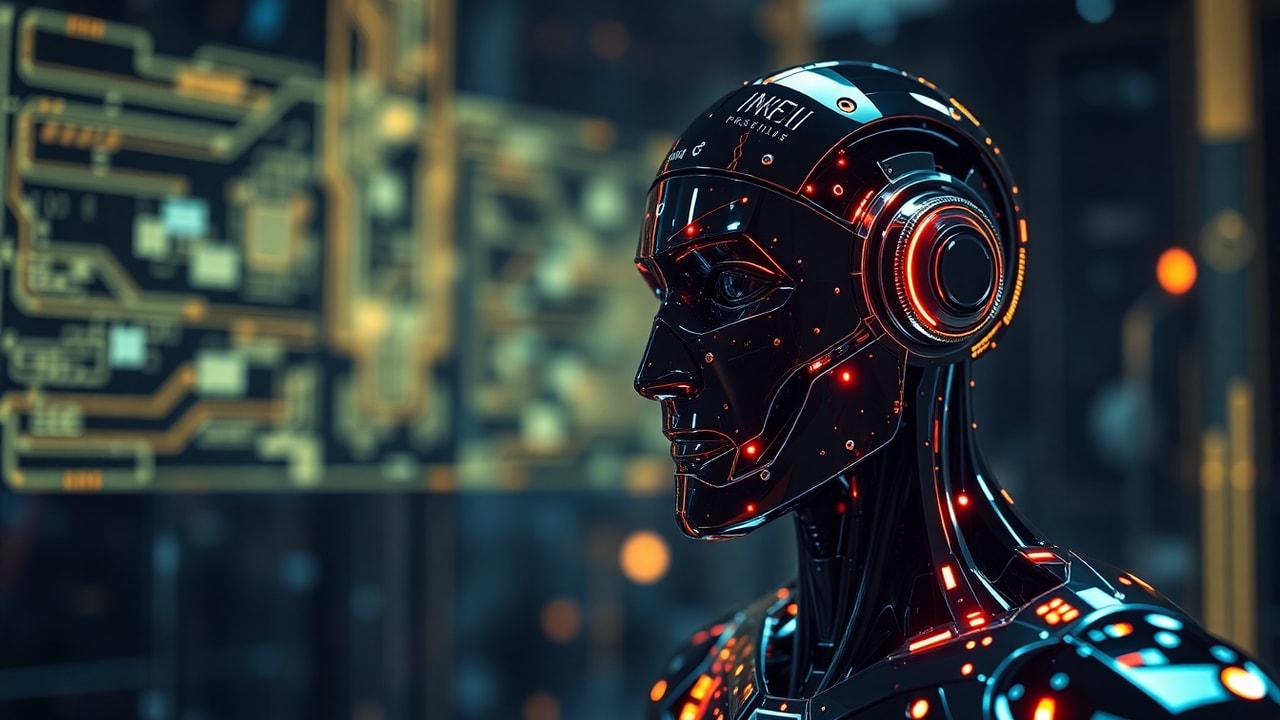
Intel is already showcasing some of these robots at the Computex trade show in Taiwan. It has even shared a video of a humanoid-style robot from the venue in a post on X.com. The company seems determined to regain its position in a market that promises exponential growth in the coming years, driven by demand for intelligent automation.
For IT professionals, this presents an opportunity to explore new system architectures that integrate AI at the edge. Server virtualization and efficient resource management will be key to deploying these systems at scale. Intel, with its bet on physical AI, not only reclaims its role in the industry but also lays the foundation for a new generation of intelligent devices.
Original source: ComputerWorld. Analysis and adaptation by ForgeNEX.
