
Office Address
Seville, Spain
Seville, Spain
Phone Number
+(34) 624 816 969
Email Address
Available on Google Play

Seville, Spain
Seville, Spain
+(34) 624 816 969





 by ForgeNEX
 Let's be honest: nothing deflates the 'advanced digital society' bubble faster than seeing a white screen with plain text and an error code. It's 1:00 PM in Seville (12:00 UTC), a full Tuesday, peak productivity time for emails and transactions. You pour yourself a coffee, go to check the status of that web project or try to access your favorite SaaS and... boom.
"Internal Server Error. Error code 500".
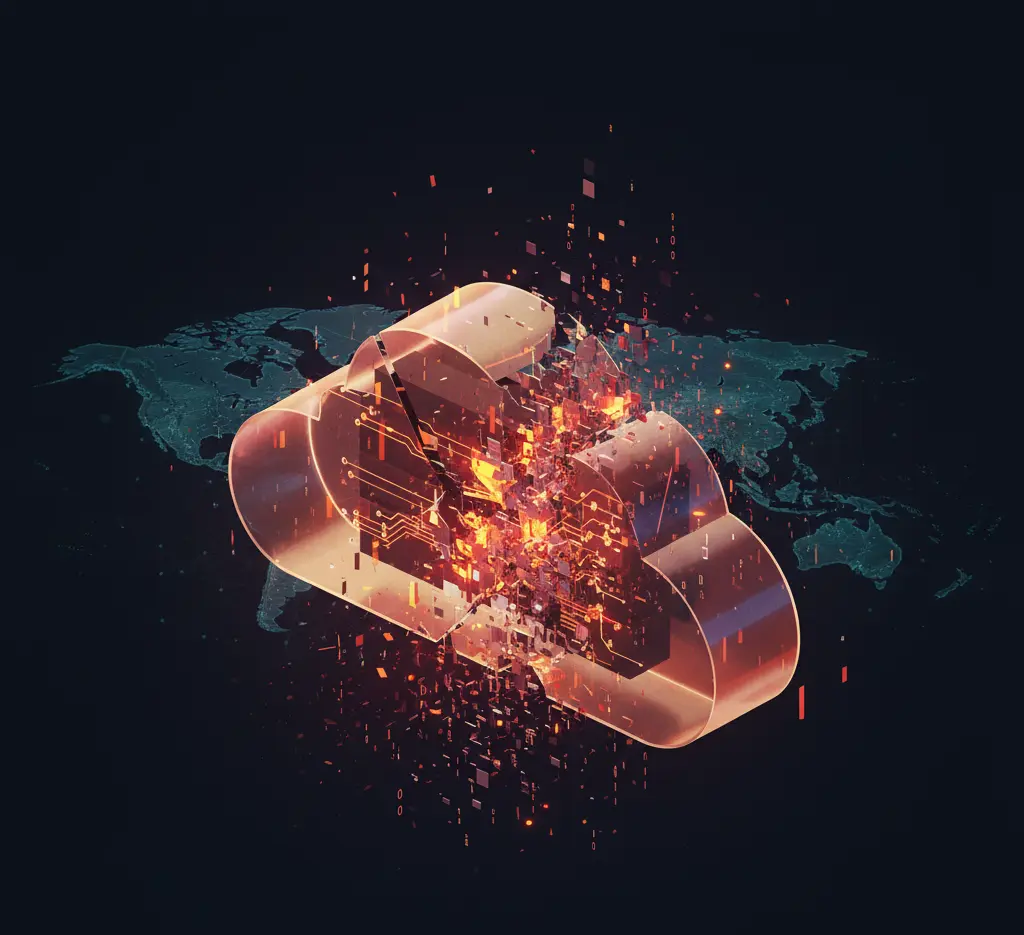
Suddenly, the office falls into an eerie silence, broken only by the sound of F5 keys being hammered in desperation. Today, November 18, 2025, the Internet has reminded us how fragile the invisible infrastructure that holds everything together can be. Cloudflare has had global issues and, yes, even our own website, forgenex.com, displayed that dreaded gray screen for a while.
But, far from panicking (or well, after the first 30 seconds of panic), situations like this give us a valuable lesson about why technology matters, but the human team behind it matters even more.
Table of contents [Show]
If you're the type who, when seeing a browser error, runs to Twitter (or X, or whatever we use in 2025) to see if "the Internet is down," today you've seen the chaos.
For those of us who work in this field, the first step isn't tweeting, it's diagnosing. Upon seeing the error on our monitors here in Seville, the first instinctive reaction is: "Did we break something?". It's the developer's impostor syndrome. You check the host: Green. You check your browser: Green. But in between, the intermediary, the giant that protects and accelerates traffic, is in Red.
The screenshots circulating in our internal Slack groups today said it all:
It's not the first time this has happened, and it certainly won't be the last. Years ago, we experienced it with Fastly, then AWS, and today it was Cloudflare's turn. This brings to the table a debate we in the tech world love to have with a beer (or coffee) in hand: network centralization.
We use services like Cloudflare because they're amazing. They protect us from DDoS attacks, make our website load fast in New York even if the server is in Dos Hermanas, and manage traffic intelligently. But by relying so heavily on these "supernodes," we put many eggs in the same basket.
When that basket breaks, it's not one website that goes down; it's half the Internet. Banks, online stores, streaming services, and yes, tech consultancies like us. The feeling of helplessness is real: your server is perfect, your code is flawless, but the "road" to reach you is closed for construction.
And this is where I wanted to get to. Because complaining that "the Internet is down" is easy. What's difficult, and what separates a professional company from absolute chaos, is the ability to react.
Imagine this scenario: You have an active sales campaign. Your clients are trying to access their user panel. It's 1:00 PM. Everything fails.
If you don't have technical IT support behind you, the situation unfolds like this:
However, when you have an emergency IT department or a tech partner (wink, wink), the movie is very different. In "force majeure" situations like today's, our job isn't to fix Cloudflare (if only we had that button), but to manage the crisis.
The first thing we do is identify that the problem is external. This is vital. It prevents your internal team from frantically touching code trying to "fix" something that isn't broken, which often ends up breaking something that was working. Knowing how to say: "It's not us, it's a global provider" in less than 5 minutes saves hours of work and stress.
If you can't bring the website up because the Madrid node is fried, your priority becomes information. A prepared IT team can:
The difference between an angry client and an understanding client is often a well-explained email sent on time.
Today was a "scare" for a while, but what if it lasts for days? This is where system architects shine. At ForgeNEX, for example, we always recommend clients with critical operations to have redundancy. Does CDN A fail? Let's have a configuration ready to go "bare" or through CDN B.
Having someone at the wheel who knows how to "bypass" the system when the main highway collapses is what ensures that, even if we go slower, we keep moving forward.
As I write this, I see the monitors starting to turn green again. Traffic is being rerouted. Cloudflare's engineers (who, honestly, I don't envy their workday today) are applying patches and mitigating the impact.
But this event leaves us with an important reflection for any digital business in 2025. Technology is wonderful; it allows us to automate, scale, and reach the whole world. But technology fails. It's a law of life. An undersea cable breaks, a firmware update goes wrong, or a data center in Tahiti (or Madrid) decides to take a break.
In those moments, when the screens go dark, the only thing left is human capital. Having a team that doesn't lose their cool, knows how to read a trace route, understands what an error 500 means, and can translate that into business language so you can keep breathing easy.
Today, we had to look at the error screen for a little while. Tomorrow, we'll continue building more robust, more secure systems, and above all, we'll continue being there for when the lights go out, to have the flashlights ready.
And you? Did the outage catch you in the middle of something important, or did you take the opportunity to have that pending coffee? We read you in the comments (now that they load)!
At ForgeNEX, we don't do magic, but we're experts at keeping calm and systems up when everything else shakes. If you want to audit the resilience of your infrastructure or simply sleep more peacefully knowing there's a team watching your servers, let's talk.
