
Office Address
Seville, Spain
Seville, Spain
Phone Number
+(34) 624 816 969
Email Address
Available on Google Play

Seville, Spain
Seville, Spain
+(34) 624 816 969



 by ForgeNEX
 Lately, there's a buzz in the tech world. A murmur heard in forums, LinkedIn groups, and even team meetings. For the last ten or fifteen years, the default answer to any infrastructure problem was, almost dogmatically, "the cloud." Need a database? AWS RDS. A web server? Azure App Service. Storage? Google Cloud Storage.
It was the promise of infinite agility. Pay only for what you use, scale with a click, and forget about whether a hard drive was making strange noises at 3 AM.
And yet, here we are, in the middle of 2025, and I keep seeing system administrators dusting off racks, startups calculating the cost of buying their own servers, and a whole host of enthusiasts (the homelab phenomenon on Reddit is fascinating) setting up Proxmox clusters on mini-PCs that fit in the palm of your hand.
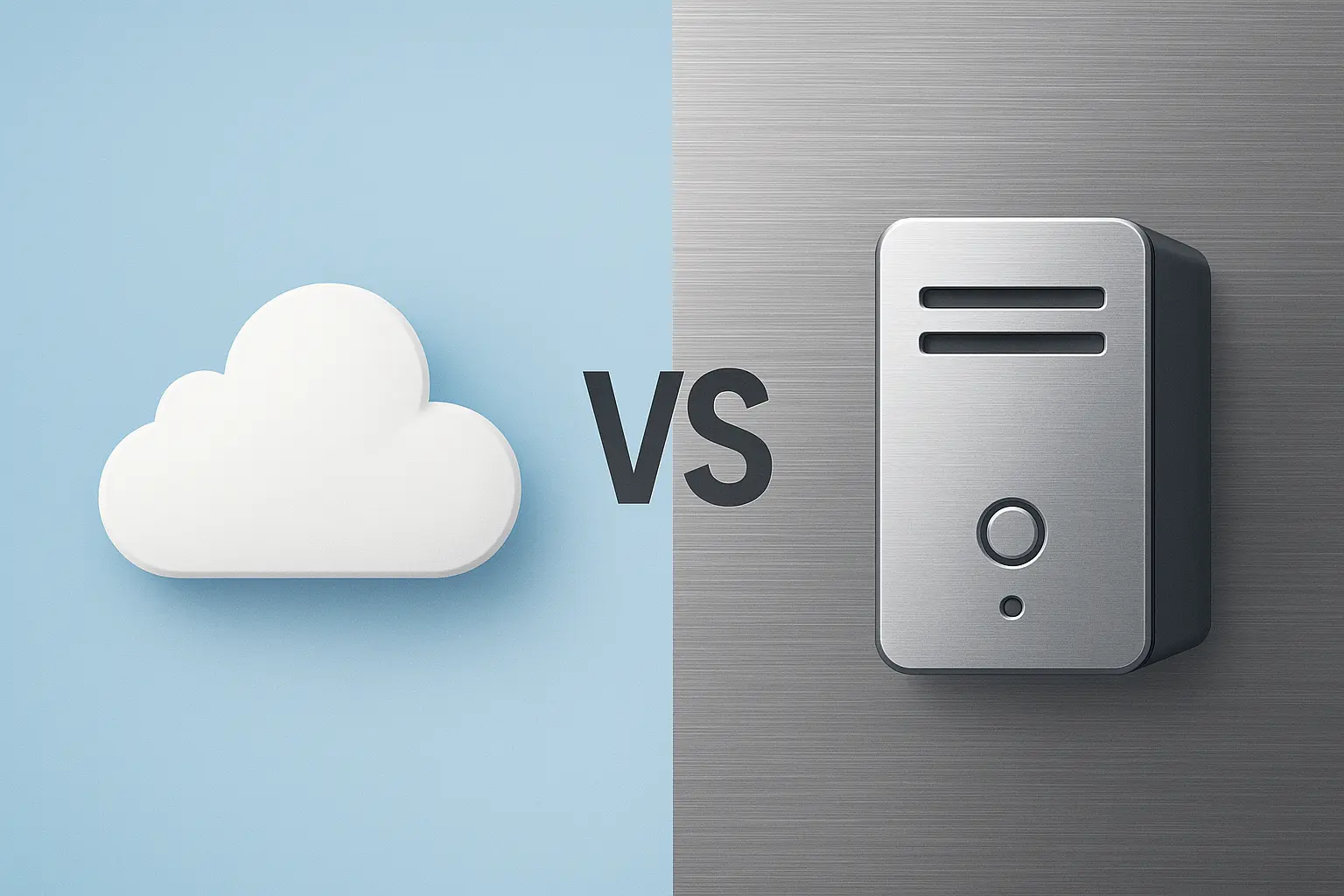
What happened? Is it just a nostalgic trend, like vinyl, or are we witnessing a necessary course correction? The reality, as always, is a hybrid.
Table of contents [Show]
To understand why "bare metal" (physical hardware) is making a comeback, we first need to be fair to the cloud. The public cloud (AWS, Azure, Google Cloud) changed the rules of the game.
Before, if a company in Seville, like the many we work with, wanted to launch a new application, the process was slow and expensive. You had to buy servers (CapEx or capital expenditure), wait for them to arrive, install them, configure them... a process of weeks or months.
The cloud turned it into OpEx (operating expense). Need power? Pull out your credit card, and in five minutes you have a server in Virginia, Frankfurt, or Singapore. This enabled the birth of phenomena like Netflix, Spotify, or the very fabric of startups as we know them. The cloud is elastic, it's (relatively) easy to manage, and its "managed" services (like databases or AI services) take a load of work off your plate that doesn't add direct value to your business.
The problem is that, like any good party, the bill comes afterward. And the cloud bill, sometimes, is a monumental hangover.
The first reason companies are re-evaluating their cloud strategy is cost.
The "pay-for-what-you-use" model is fantastic when you start, but it's terribly difficult to predict when you grow. The real silent villain of the cloud isn't so much compute or storage (which are relatively cheap), but the egress fees (outbound traffic).
Imagine this: you store 10 TB of data on S3 (AWS). Storing it costs you a reasonable amount. But if you suddenly need to get those 10 TB out to analyze them elsewhere or serve them to your customers, the data transfer bill can be, literally, thousands of euros. It's the toll for leaving the ecosystem.
Companies that started with a €500 monthly bill suddenly see it skyrocket to €5,000 or €15,000 without a proportional increase in their revenue. When a workload is predictable and constant (for example, a database that runs 24/7), the cloud's pay-per-use model almost always ends up being more expensive than having your own server dedicated to that task.
The famous data repatriation by 37signals (creators of Basecamp), saving millions by leaving the cloud, was a warning shot. Now, many are doing the same math.
This is where self-hosting comes in. But let's not be mistaken. We're not talking about going back to having an old Pentium IV in a corner of the office gathering dust.
The self-hosting of 2025 is technologically very sophisticated. It's the "private cloud" done right.
Thanks to incredibly mature open-source tools, today you can set up an infrastructure that rivals the public cloud in flexibility, but on your own hardware.
For an enthusiast, this means controlling their privacy by running Nextcloud (an alternative to Google Drive/Photos) or their own password manager (Vaultwarden).
For a business, it means having predictable costs. You know the hardware costs you X, and the electricity costs you Y. The end. No surprises at the end of the month because a developer accidentally left a virtual machine running.
At this point, it might seem like I'm advocating for a mass exodus from the cloud. Nothing could be further from the truth. Abandoning the cloud completely is as bad an idea as "moving everything up" without thinking was.
The real debate isn't "Cloud vs. Self-Hosted." It's "Which workloads go where?"
The smart solution, the one we see succeeding in digitally maturing companies, is the Hybrid Cloud.
The Hybrid Cloud is nothing more than using common sense: take the best of both worlds.
What does this look like in practice?
What we're experiencing is not the end of the cloud, but the end of the "honeymoon" with the cloud.
Technology moves like a pendulum. We went from centralized mainframes to decentralized PCs. Then we re-centralized everything in the cloud. Now, the pendulum is starting to swing back to a middle ground: a smart mix of local (self-hosted) and cloud resources.
The true skill of a good technology partner (and here we're patting ourselves on the back a bit at ForgeNEX) is no longer telling you to "move it to the cloud," but sitting down with you, looking at your bills, understanding your business, and telling you: "This, you can save on if you put it on this local server. And this other thing, leave it in the cloud, it gives you life."
In the end, it's all about control. Control over your data, over your privacy, and, above all, over your costs.
