
Office Address
Seville, Spain
Seville, Spain
Phone Number
+(34) 624 816 969
Email Address
Available on Google Play

Seville, Spain
Seville, Spain
+(34) 624 816 969




 by ForgeNEX
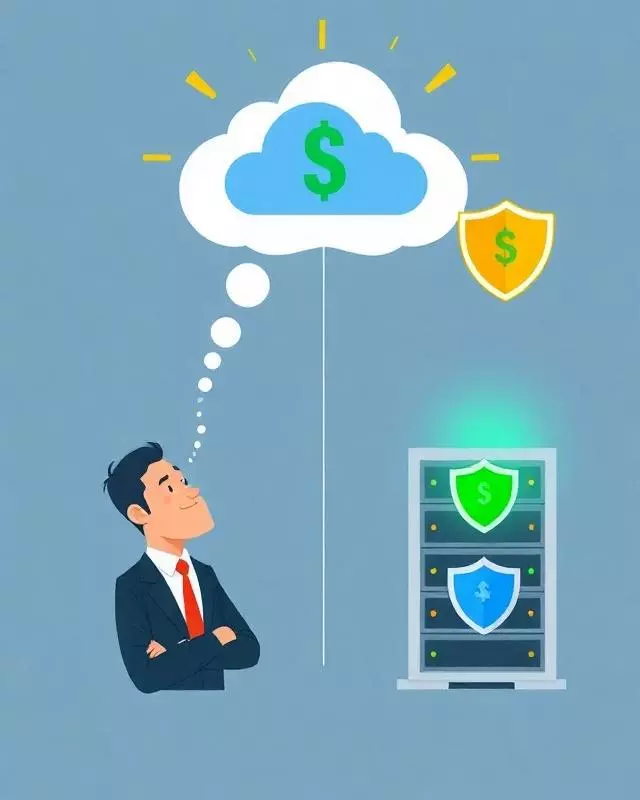
 The massive adoption of the cloud has been sold as the ultimate solution for companies' technological infrastructure. "It's cheaper," "it's more scalable," "it's more secure," they tell us. But how true is this? The reality is that the cloud is a huge financial trap disguised as convenience. Let's dismantle this illusion and defend the importance of local servers in a business environment.
Table of contents [Show]
When you start doing the math, the cloud seems like an attractive option. You don't have to buy hardware, maintenance is "someone else's problem," and you can scale easily. But in practice, the cumulative monthly cost ends up being a financial drain.
Practical example:
In two years, the spending on the cloud far exceeds the investment in your own hardware. The cloud is not cheaper; it is simply a recurring payment model that benefits the providers, not the users.
Using the cloud means giving up control. When you depend on a third party, your infrastructure is in their hands. If their servers go down, you go down with them. If they decide to change their policies or prices, you pay the consequences. And disaster recovery? Good luck trying to recover data from a provider that unilaterally decides how long it takes to respond.
With a local server, you have absolute control over your backups, recovery times, and contingency measures. You don't depend on an internet connection to access your own critical systems.
Large cloud companies invest heavily in security, but that doesn't mean your company is more protected. In the end, you depend on their infrastructure and policies. Data leaks, unauthorized access, and security breaches are recurring events in cloud services.
In a well-managed on-premise environment with trained personnel, local servers can be even more secure, as access control is direct and you do not depend on systems shared with thousands of other companies.
There are scenarios where the cloud is useful:
But if you have a competent technical team and need a stable, reliable, and cost-effective infrastructure in the long term, local servers are still the best option.
The cloud is just another tool, not an absolute necessity. Many companies have abandoned local infrastructure without really evaluating the costs and risks. If your operation needs stability, control, and cost efficiency, do not underestimate the power of a well-configured local server.